
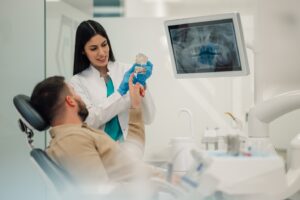
After several conversations with your dentist about your dental implant surgery, you may feel good about the process and look forward to seeing permanent results. But do you know what to expect after your procedure? Are there certain precautions you should take? Are there foods you should avoid? When can you plan to receive your new, customized teeth? If you have yet to think about your time spent in recovery, here are 3 questions to ask your dentist about post-op dental implant surgery.
Will My Dental Implant Recovery Be Painful?
It will take time for the local anesthesia to wear off after dental implant surgery, but when it does, you will likely feel some discomfort and soreness, which is normal. You can alleviate this problem with an over-the-counter pain reliever, such as ibuprofen or Tylenol.
It is recommended that you take the first dose of pain-relieving medication before your anesthesia wears off so that you remain comfortable during recovery. Make sure to follow all dosing instructions and call your dentist’s office if you notice the discomfort worsening over time.
When Can I Expect to Get My New Teeth?
Each dental implant case is different, so when you receive your new teeth is largely based on the type of implants you receive. In most cases, you will need to wait 4-6 months before having your custom restoration installed. This is because osseointegration must be successful, which is the fusing of your implants to your jawbone.
Once your dentist is satisfied that a firm foundation has been established, metal abutments must be placed. After you are fully healed, your dental team will secure your new teeth so that you can begin to enjoy life with a healthier smile.
What Will I Be Able to Eat During Dental Implant Recovery?
After the gauze is removed and the anesthesia wears off, you can eat something soft. You will want to avoid anything hard, crunchy, hot, spicy, or chewy for several days, as your mouth will need time to heal properly.
Biting down on something that requires chewing will only cause further discomfort, and you risk dislodging the blood clot(s). Instead, opt for softer foods, such as yogurt, warm mashed potatoes, pudding, and oatmeal.
Your dental implant consultation is a great time to ask as many questions as you like about the process and what you can expect after the procedure. Remember, your dentist is here to provide you with reliable, trustworthy answers so that you remain confident in your decision to receive dental implants.
About the Author
Dr. Barry J. Uldrikson brings more than 45 years of experience to patients visiting Riata Dental. After graduating from Loma Linda University School of Dentistry with his DDS, he earned a Master of Sedation Dentistry and completed the Misch International Implant Resident Program. Providing in-house dental implant placement and restoration, he can answer any questions you might have about the process and what to expect after treatment. Visit our website or call (928) 692–9394 to schedule an appointment to learn how you can ensure a successful recovery.